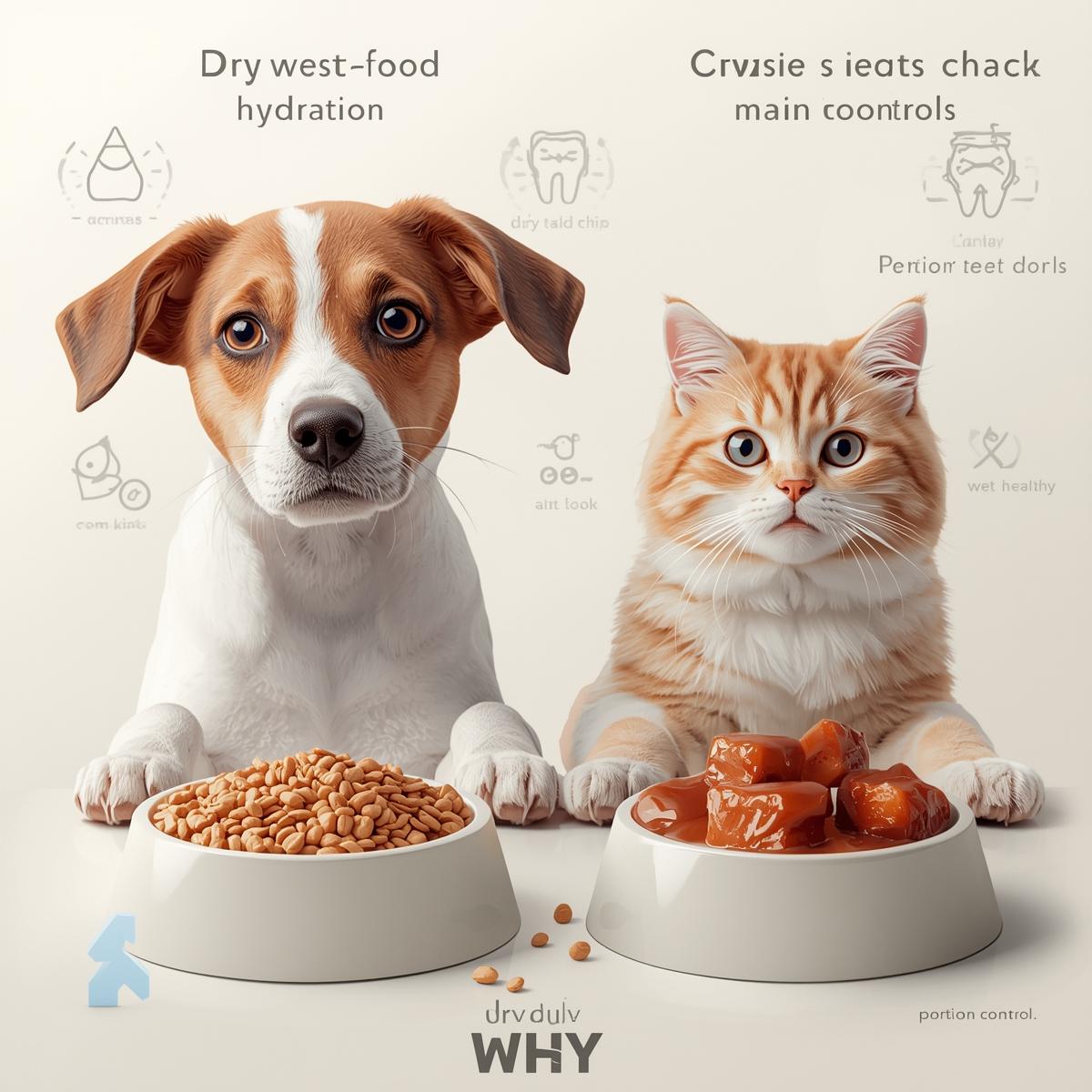
Choosing the right type of food for pets is a critical aspect of maintaining their health. Pet owners often face the choice between dry food (kibble) and wet food (canned or pouch). Both types have unique benefits and limitations, and the best choice depends on the pet’s age, species, health status, activity level, and personal preference. Understanding the differences helps owners make informed decisions that support nutrition, digestion, and overall well-being.
Table of Contents
- Introduction
- Overview of Dry Food
- Overview of Wet Food
- Nutritional Comparison
- Hydration Considerations
- Digestibility and Absorption
- Benefits of Dry Food
- Benefits of Wet Food
- Limitations of Dry Food
- Limitations of Wet Food
- Feeding Guidelines for Dry Food
- Feeding Guidelines for Wet Food
- Life Stage Considerations
- Weight Management and Diet Control
- Dental Health Considerations
- Special Health Conditions
- Combining Dry and Wet Food
- Cost Comparison and Budgeting
- Tips for Transitioning Between Foods
- Conclusion
Introduction
Choosing between dry and wet food affects nutrition, hydration, and long-term health. Some pets thrive on one type, while others benefit from a combination. Understanding differences, benefits, and potential risks ensures proper nutrition and supports a pet’s growth and maintenance.
Overview of Dry Food
- Dry food, also known as kibble, is low in moisture (typically 8–12%).
- It is shelf-stable, easy to store, and convenient to measure.
- Available in formulas for puppies, kittens, adults, seniors, and special diets.
- Often fortified with vitamins and minerals to meet nutritional requirements.
Overview of Wet Food
- Wet food contains 70–85% moisture, providing hydration along with nutrients.
- Comes in cans, pouches, or trays with varying flavors and textures.
- Typically more palatable, which may encourage eating in picky pets.
- Available in life-stage-specific and prescription formulas.
Nutritional Comparison
- Protein: Both dry and wet foods can provide adequate protein if labeled “complete and balanced.”
- Fat: Wet food often contains slightly higher fat levels; dry food varies depending on the formula.
- Carbohydrates: Dry food typically contains more carbohydrates due to manufacturing processes.
- Vitamins and Minerals: Both types are fortified to meet daily requirements.
- Calories: Dry food is more calorie-dense, so portion control is critical.
Hydration Considerations
- Wet food provides hydration, reducing the need for additional water consumption.
- Dry food requires sufficient fresh water to prevent dehydration.
- Proper hydration supports kidney and urinary tract health.
Digestibility and Absorption
- Wet food is often easier to digest, particularly for cats and senior pets.
- Dry food may require more chewing, which can slow digestion.
- Digestive tolerance should be monitored when changing food types.
Benefits of Dry Food
- Convenient to store and serve
- Longer shelf life
- Helps control tartar buildup on teeth
- Can be left in a bowl for free-feeding (if portion controlled)
- Typically more economical than wet food
Benefits of Wet Food
- High moisture content supports hydration
- Generally more palatable, encouraging eating in picky pets
- Easier for pets with dental issues or limited chewing ability
- Reduces concentrated calorie intake per volume, which can help regulate appetite
- Offers variety in flavors and textures, preventing food boredom
Limitations of Dry Food
- Low moisture content may contribute to dehydration if water intake is insufficient
- Some cats may not find kibble palatable
- Can promote overeating if portion control is ignored
- May contain higher carbohydrate content, which is less ideal for obligate carnivores like cats
Limitations of Wet Food
- Shorter shelf life after opening
- Can be more expensive than dry food
- Requires refrigeration after opening
- May contribute to dental plaque if fed exclusively without other oral care measures
Feeding Guidelines for Dry Food
- Measure portions according to the pet’s weight, age, and activity level
- Provide fresh water at all times
- Store in a cool, dry place to maintain freshness
- Gradually transition if switching brands or formulas to prevent digestive upset
Feeding Guidelines for Wet Food
- Follow feeding guidelines on the product label
- Refrigerate unused portions and use within 24–48 hours
- Serve at room temperature for improved palatability
- Observe pet’s preference and digestive tolerance
Life Stage Considerations
- Puppies and kittens: Require high-calorie, nutrient-dense diets; wet food may help encourage feeding.
- Adult pets: Dry or wet food can meet requirements; portion and caloric control is essential.
- Senior pets: Wet food may be easier to chew and digest; monitor weight and hydration.
Weight Management and Diet Control
- Dry food is calorie-dense; accurate measurement is necessary to prevent obesity.
- Wet food has lower calorie density per volume, which can help manage weight while providing larger meals.
- Combining dry and wet food can support satiety while controlling total caloric intake.
Dental Health Considerations
- Dry food may reduce tartar buildup due to chewing action.
- Wet food alone does not provide mechanical cleaning; additional dental care may be necessary.
- Brushing, dental chews, or professional cleanings help maintain oral health.
Special Health Conditions
- Kidney issues: Wet food supports hydration, helping kidney function.
- Diabetes or obesity: Portion control and calorie management are critical; dry food with lower carbohydrate content may be preferred.
- Dental problems: Wet food is easier to chew and digest.
- Gastrointestinal sensitivities: Wet food may be gentler on the digestive system.
Combining Dry and Wet Food
- Provides hydration, palatability, and dental benefits
- Allows flexibility in feeding schedules
- Helps prevent boredom and supports variety in flavor and texture
- Gradual introduction is recommended to avoid digestive upset
Cost Comparison and Budgeting
- Dry food is typically more cost-effective for long-term feeding.
- Wet food is more expensive due to packaging and higher moisture content.
- Blending dry and wet food can balance cost, convenience, and nutritional benefits.
Tips for Transitioning Between Foods
- Gradually mix new food with the old over 7–10 days
- Monitor stool consistency, appetite, and overall health
- Adjust portions according to caloric content
- Avoid abrupt changes to prevent gastrointestinal upset
Conclusion
Choosing between dry and wet food depends on the pet’s individual needs, health conditions, life stage, and preferences. Dry food offers convenience, cost-effectiveness, and dental benefits, while wet food provides hydration, palatability, and easier digestion. Combining both types can optimize nutrition, hydration, and overall satisfaction. Monitoring portions, ensuring proper water intake, and consulting a veterinarian for special dietary needs ensures pets remain healthy, active, and maintain optimal weight.