
Peaceful Days
Are your puppy days full of trouble with a capital T?
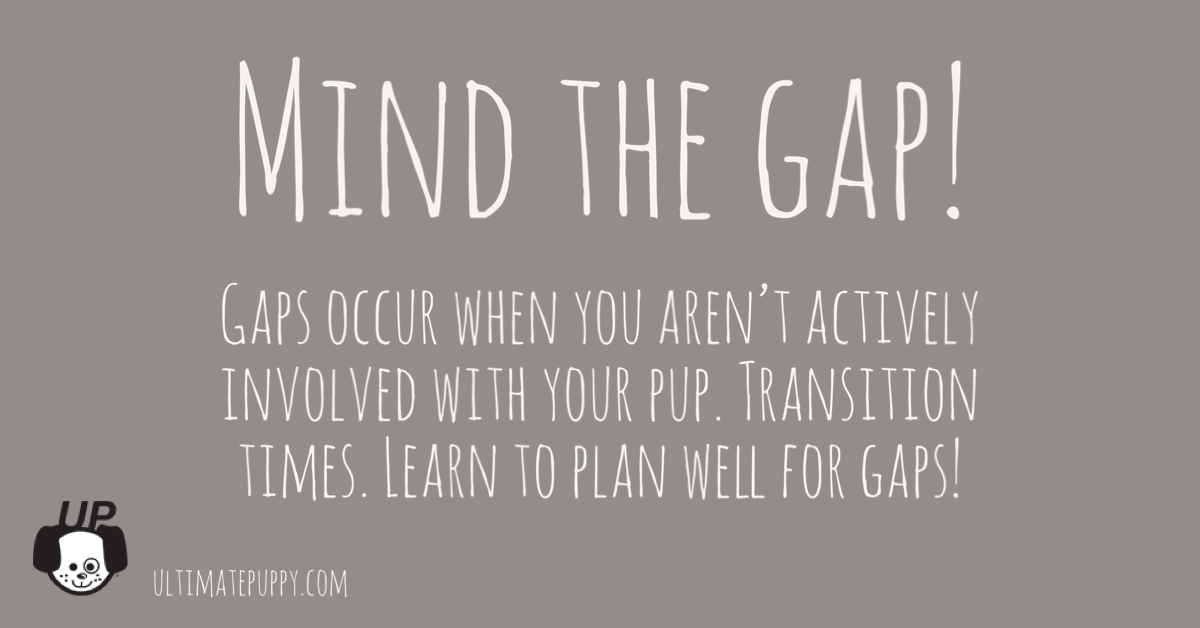
Peaceful days are possible when you learn to mind the gap.
Gaps occur when you are not actively involved with your pup. If you don’t plan well for these times your puppy will make puppy choices regarding how to spend the time. Many of these choices will prove unpopular.
When you mind the gaps, magically, unwanted behaviors cease to be a problem. Unwanted habits are less likely to develop. Utilize smart management strategies now and keep things un-fussed.
Popular Puppy Choices for Gaps Include (but are not limited to):
- Peeing and pooing on the floor
- Jumping up on the coffee table
Where Are Daily Gaps?
Can you identify gaps in your day that need attending to?
Bathroom, play, chew…. gap
Game, drink… gap
Nap, wake, bathroom… gap
Walk, drink… gap
Play, eat… gap
Worthwhile Ideas For Gap Times
- Treat scatters are a great way to buy you time. If you need to take your eyes off your puppy to do a quick task toss a handful of treats into a snuffle mat.
- Something for them to do (chew). Puppies need to chew. Make chews readily available so your pup always has something appropriate to gnaw on. These chews must be of interest to the pup. It may take some experimentation to find what your pup loves and what works for the household. Rope toys and stuffed animals are not chews. Chews would be something your pup holds onto and gnaws. My go-to chews include bully sticks stuck in *grippers, Whimzees (or something similar), hooves, yak cheese sticks, or knuckle bones (smoked or raw).
- Food Stuffed Toys and Puzzles. Toys you stuff with food make for the perfect puppy sitter. You get a break and the pup gets to get their doggyness on. Paper rolls and bags stuffed with treats are fun too. Save those paper towel rolls and brown bags. They make great shredding toys.
- Fun Zones! A Fun Zone utilizes all of the above suggestions. Put a selection of 3 to 6 down for the pup. For a twist try hiding a few for the pup to search for, or put everything in an open toybox and let the pup explore and pull out what they want.
- Hold or carry your pup. This will prevent a bathroom accident or potentially chasing the kids.
- A nap. Did you know a puppy needs 18-20 hours of sleep? Not enough napping throughout the day can lead to an overtired pup who is more likely to be extra bitey.
* A gripper is something that grips a chew and prevents the pup from ingesting the small end left after chewing. For example the Qwizl by West Paw.
Mind The Gap!
Thoughtfully managed gaps will lead to your adult dog making choices you’ll both be happy with. The Ultimate Puppy Bytes and Puppy Planner are designed to help you stay inspired and plan your puppy days. A puppy with a plan makes for happy puppies and happy puppy people.

Discover more from Ultimate Puppy
Subscribe to get the latest posts sent to your email.
a-puppy-with-a-plan-makes-for-peaceful-days-ultimate-puppy